
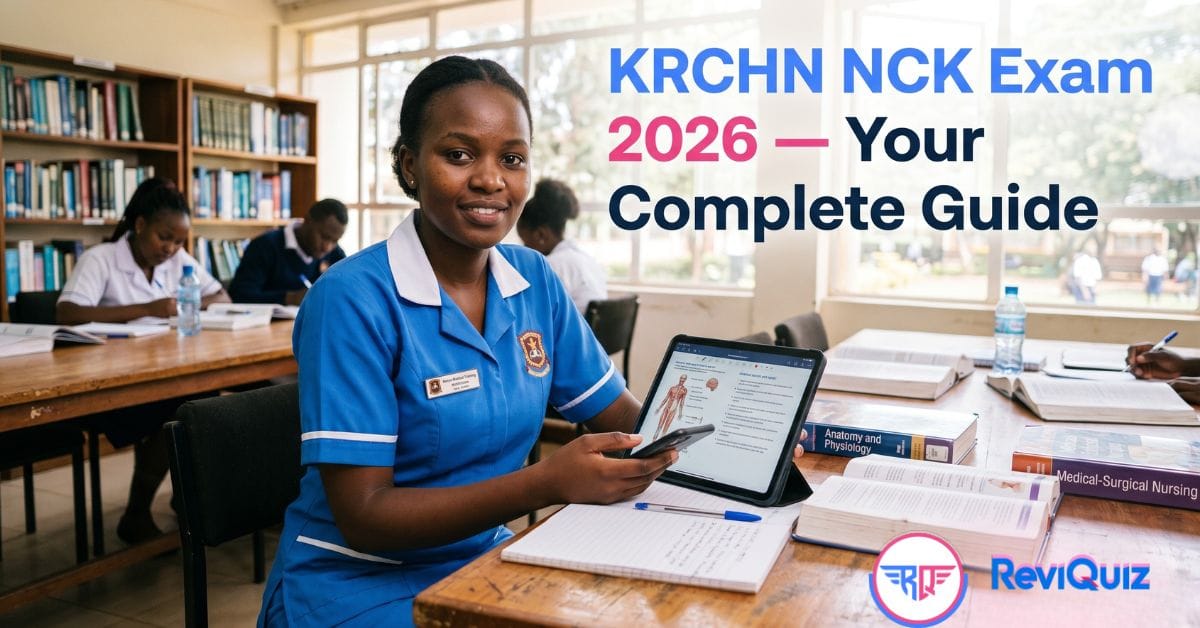
Why KRCHN Students Need a Smarter Revision Strategy in 2026 If you are a Kenya Registered Community Health Nursing (KRCHN) student preparing for the Nursing Council of Kenya (NCK) licensure examination, you already know the stakes. This single exam determines whether you earn your nursing licence, begin your career, and start earning — or whether you face the heartbreak of a resit. Every year, thousands of KRCHN diploma students from KMTC campuses, Amref International University, St. Luke’s College, and dozens of other NCK-approved institutions sit this exam. And every year, too many fail — not because they lack ability, but because they revised the wrong way. This guide is different. It does not just list topics. It walks you through exactly what the KRCHN NCK exam looks like in 2026, which subjects carry the most weight, how to build a revision timetable that works, and where to access the highest-quality practice questions with detailed rationales. Whether you are preparing for the February or May sitting, this is your complete roadmap. What Is the KRCHN Programme? The Diploma in Kenya Registered Community Health Nursing (KRCHN) is a three-year, full-time programme offered at medical training colleges and private nursing schools across Kenya. The curriculum blends theoretical classroom learning with supervised clinical placements in hospitals, health centres, and community settings. Core areas of study include medical-surgical nursing, maternal and child health, community health, mental health nursing, pharmacology, anatomy and physiology, microbiology, and nursing research. The programme is designed to produce graduates who are competent, ethical, and evidence-based practitioners. After completing the programme, every KRCHN graduate must pass the NCK Final Qualifying Examination (FQE) — the national licensure exam — before they can legally practise as a registered nurse in Kenya. Key facts at a glance: The KRCHN NCK Exam Structure: Paper 1 and Paper 2 Explained Understanding the exam structure is the first step to passing it. Since the NCK moved to a two-paper format (replacing the old four-paper system), KRCHN candidates now sit two papers — typically on the same day or across two consecutive days. KRCHN Paper 1 — Medical-Surgical & Clinical Nursing Paper 1 tests your knowledge of acute and chronic conditions, clinical procedures, pharmacology, and the scientific foundations of nursing practice. Think of it as the “hospital ward” paper. High-yield topics in Paper 1: Major Subject Area Estimated Weighting Key Sub-topics & High-Yield Focus Areas Medical-Surgical Nursing 40% * Post-operative complications (respiratory, wound care)* Systemic conditions (Renal/AV fistulas, Diabetes, COPD, Cardiovascular)* Shock management (fluid resuscitation)* Emergency care (burns, snake bites) Anatomy & Physiology 25% * Homeostatic mechanisms & cellular function (sodium-potassium pump)* Musculoskeletal system (troponin, muscle contractions)* Nervous system (cranial nerves, brain injury states)* Renal, endocrine, and acid-base balancing Fundamentals of Nursing 20% * The Nursing Process (specifically Planning & Assessment phases)* Infection control guidelines (droplet vs. contact precautions)* Nutritional interventions (low sodium, low protein for hepatic conditions)* Patient safety, positioning, and basic life support (CPR standards) Pharmacology 15% * Critical antidotes (e.g., Atropine, Pyridoxine)* Drug classes and toxicities (Aminoglycosides/nephrotoxicity, Statins/rhabdomyolysis)* Safe medication administration, calculations, and TPN safety KRCHN Paper 2 — Community Health, Midwifery & Professional Practice Paper 2 is broader in scope. It covers community and public health, maternal-child health, research, ethics, leadership, and mental health. Think of it as the “community and professionalism” paper. High-yield topics in Paper 2: NCK Exam 2026 Schedule: Key Dates for KRCHN Candidates Staying on top of deadlines is critical. The NCK has scheduled two major exam sittings in 2026 for KRCHN candidates: February 2026 Sitting Milestone Date Application opens 10th November 2025 Application deadline 31st December 2025 Withdrawal deadline 23rd January 2026 Mock exams 2nd–6th February 2026 Rehearsals 17th February 2026 KRCHN Main Exam 19th February 2026 Results declaration 31st March 2026 May 2026 Sitting Milestone Date KRCHN Main Exam 13th–15th May 2026 Full schedule Check NCK Exam 2026 Schedule Important reminders: For the full step-by-step registration guide, read: How to Register for NCK Exam/Online Services in 2026 For a full overview of the NCK exam, visit our NCK Exam Kenya guide below. NCK Exam Kenya 2026:The Complete Guide How the NCK CBT Exam Works (What to Expect on Exam Day) Since 2020, the NCK has administered all licensure exams through Computer-Based Testing (CBT) using the Digi-Proctor system. Here is what to expect: Exam format: Each paper is a timed session (typically 2–3 hours) that includes multiple-choice questions (MCQs), short-answer questions (SAQs), and scenario-based questions testing clinical judgement. On exam day: Pro tip: Many students underperform because the CBT format feels unfamiliar. Practising with timed, screen-based questions before exam day makes a significant difference. This is exactly why ReviQuiz courses are built to simulate the CBT experience on your phone, tablet, or laptop. 👉 Try a free KRCHN practice quiz now → The 12 Most Commonly Tested KRCHN Topics (Ranked by Frequency) Based on analysis of NCK exam trends from 2020–2025, past university papers, and examiner patterns, these are the topics that appear most frequently on KRCHN exams. Prioritise them in your revision: 5 KRCHN Sample MCQs (With Answers & Rationales) Here are five sample questions in the style of the NCK exam. Test yourself, then read the rationale to understand the reasoning: Question 1 (Medical-Surgical Nursing) A 58-year-old male patient is admitted with acute chest pain radiating to the left arm. His ECG shows ST-segment elevation in leads II, III, and aVF. Which of the following is the PRIORITY nursing action? A. Administer sublingual nitroglycerin as prescribed B. Obtain a 12-lead ECG C. Position the patient in high Fowler’s position D. Prepare the patient for emergency PCI Answer: A — Administer sublingual nitroglycerin as prescribed Rationale: While all actions may be appropriate, the immediate priority is to relieve myocardial ischaemia. Sublingual nitroglycerin causes coronary vasodilation and reduces cardiac workload. A 12-lead ECG has already been obtained (the question states the findings). Emergency PCI may follow, but pharmacological intervention comes first in the nursing timeline. Question 2 (Community Health Nursing) Which of the following BEST describes the concept of

BScN NCK Exam Revision 2026: Master Paper 1 & Paper 2 with Targeted MCQs, Rationales & Mock Exams
Are you a Bachelor of Science in Nursing (BScN) graduate in Kenya preparing for the Nursing Council of Kenya (NCK) licensure examination? The NCK exam is your gateway to practicing as a registered nurse, testing advanced clinical reasoning, evidence-based practice, and decision-making skills at degree level. Unlike diploma-level (KRCHN) exams, the BScN papers emphasize higher-order thinking, research interpretation, management, and complex patient scenarios. With exams scheduled for February 20, 2026 and May 15, 2026 (two papers per sitting), early and smart preparation is essential. ReviQuiz is Kenya’s leading NCK revision platform, offering BScN-specific MCQs borrowed and adapted from recent NCK papers and university sources, complete with detailed rationales. No more guessing with outdated PDFs—practice in a realistic, mobile-friendly format that builds real understanding. Ready to pass on your first try? Explore our BScN revision courses here: https://reviquiz.com/bscn/ What is the NCK Licensure Exam for BScN Graduates? The Nursing Council of Kenya (NCK) licensure examination is the mandatory national test that every qualified nurse must pass before they can legally practise as a registered nurse in Kenya. Established under the Nurses and Midwives Act (Cap 257 of the Laws of Kenya), the NCK is the sole professional regulatory body for all nursing and midwifery cadres in the country. Its mandate is clear: ensure that nurses entering the workforce are competent, safe, and fit to practise. For holders of a Bachelor of Science in Nursing (BScN) degree, this means sitting a two-paper examination that tests not only your clinical knowledge but your ability to think critically, reason through complex patient scenarios, and apply evidence-based practice — the hallmarks of degree-level nursing education. Key point: Passing the NCK exam is not optional. No licence = no practice. No exceptions. Who Must Sit the BScN NCK Exam? You must sit the BScN NCK examination if you are: If you hold a KRCHN diploma, you sit a different exam under a different cadre ; see Section 3 below for a full comparison. 3. BScN vs KRCHN : Understanding the Difference This is one of the most common points of confusion for candidates. Many study the wrong materials simply because they are unclear on which cadre they belong to. Feature BScN (Degree) KRCHN (Diploma) Full Name Bachelor of Science in Nursing Kenya Registered Community Health Nurse Programme Duration 4 years (university) 3 years (KMTC / nursing college) Exam Papers Paper 1 & Paper 2 Paper 1 & Paper 2 Question Difficulty Higher-order clinical reasoning, EBP Core clinical knowledge and community health Content Emphasis Advanced Med-Surg, leadership, research, critical care Community health, primary care, fundamentals Registration Title Registered Nurse (degree) Kenya Registered Community Health Nurse The bottom line: If you studied at a university and hold or are completing a BScN degree — you sit the BScN NCK exam and you must use BScN-specific revision materials. Using KRCHN materials will leave gaps in your preparation. 👉 Not sure which cadre applies to you? Contact us via WhatsApp for guidance. BScN NCK Exam Structure: Paper 1 and Paper 2 The BScN NCK examination consists of two separate papers, each sitting in a single session on the same day or on consecutive days, depending on the exam schedule. Paper 1 — Clinical Nursing Sciences Paper 1 focuses on the foundational and clinical science content underpinning nursing practice. This typically includes: Paper 2 — Applied Nursing Practice Paper 2 moves into applied practice, specialties, and the professional domains of degree-level nursing: Important: The NCK does not publish an official question-by-question syllabus breakdown. The distribution above is based on past paper analysis and current NCK exam trends. ReviQuiz MCQs are built around this distribution. Both papers are multiple-choice questions (MCQs), delivered on computer at approved examination centres. Each session runs for two hours (9:00 AM to 11:00 AM and 2:00 PM to 4:00 PM). Core Subjects Tested in the BScN NCK Exam As a BScN candidate, you are expected to demonstrate a higher level of clinical reasoning than diploma-level cadres. The NCK tests your ability to analyse patient scenarios, apply evidence, and make sound clinical decisions — not just recall facts. The following subjects are consistently high-yield across both papers: 🔴 High Priority (Appear in Almost Every Exam) 🟡 Medium Priority (Regularly Tested) 🟢 Always Include (Smaller but Consistent Weight) Pro tip: BScN candidates are frequently caught off-guard by research and EBP questions. Many come from a clinical background and neglect nursing research entirely. Don’t make that mistake — ReviQuiz includes dedicated research MCQs with rationales. NCK Exam 2026: Key Dates for BScN Candidates The NCK conducts examinations in multiple sessions across the year. For 2026, two sessions have been confirmed: February 2026 Session (Resit / First Sitting) Milestone Date Application Opens 10th November 2025 Application Deadline 31st December 2025 Withdrawal Deadline 23rd January 2026 Mock Exams 2nd – 6th February 2026 Rehearsals 17th February 2026 BScN Main Exam 20th February 2026 Declaration of Results 31st March 2026 May 2026 Session Milestone Date BScN Main Exam 13th May 2026 Rehearsals 20th May 2026 Declaration of Results 30th June 2026 Always verify dates with the official NCK portal at nckenya.com or through your institution. Dates are subject to change at NCK’s discretion. The exam fee is KSh 8,000 per programme as per the NCK Service Charter (2025 revision). Late registration attracts an additional penalty fee. How the Exam Is Delivered (Computer-Based Testing) Since 2021, the NCK has moved to computer-based testing (CBT) for its licensure examination. This is an important shift that many candidates do not adequately prepare for. Key things to know about exam day: Why CBT Practice Matters The computer-based format changes your exam psychology. Reading on a screen is different from paper. Navigating between questions, flagging uncertain ones, and managing a live countdown timer all add pressure. ReviQuiz is built entirely as a computer-based platform — every quiz and mock exam you do on ReviQuiz replicates the CBT environment, including timed sessions and instant result feedback. 8. The Biggest Mistakes BScN Candidates Make Understanding what others do wrong
Anatomy & Physiology for the NCK Exam: High-Yield Topics, Tips & 10 Free Practice MCQs (2026)
If you have ever opened a nursing textbook and felt your heart sink at the sheer volume of Anatomy and Physiology content you need to master before your NCK licensure exam, you are not alone. Anatomy and Physiology — commonly written as A&P — covers everything from individual cells to all 13 major body systems. And the Nursing Council of Kenya (NCK) tests it across both Paper 1 and Paper 2 for KRCHN Diploma candidates, and throughout the BScN Degree papers for university candidates. It also appears as foundational knowledge underlying questions in Medical-Surgical Nursing, Pharmacology, Paediatrics, Midwifery, and Community Health. In short: if your A&P is weak, every other nursing subject suffers. This comprehensive guide will show you exactly which anatomy and physiology topics carry the most marks in the NCK exam, how to study each body system effectively, and how to apply that knowledge to the NCK’s scenario-based multiple choice question (MCQ) format. We have also included 10 free NCK-style A&P practice questions with full rationales at the end — so you can test your knowledge right now. Ready? Let’s build that foundation. Why Anatomy & Physiology Is Non-Negotiable for the NCK Exam Many KRCHN and BScN candidates make the mistake of treating A&P as a first-year subject they have already “done” and then focusing all their revision energy on clinical subjects like Medical-Surgical Nursing or Community Health. This is one of the most costly errors you can make before the NCK exam. Here is why A&P demands serious revision attention: It is explicitly examinable across all cadres. The NCK syllabus lists Anatomy and Physiology as a core examinable subject for BScN Degree candidates, KRCHN Diploma candidates, Kenya Enrolled Nurses (KEN), and every higher diploma speciality cadre including KRCCN (Critical Care), KRPAEDN (Paediatrics), KRON (Oncology), and more. It underpins the clinical reasoning the NCK now emphasises. Since the shift to online, computer-based testing via Digi Proctor, the NCK exam has moved decisively away from simple recall questions towards scenario-based MCQs that require you to apply knowledge. You cannot correctly interpret a clinical scenario about a patient in respiratory distress without knowing how gas exchange works. You cannot choose the right nursing intervention for a patient with increased intracranial pressure without understanding how the brain is structured and how cerebrospinal fluid circulates. It connects every subject on the paper. When you master A&P properly, questions in Pharmacology become easier (because you understand how drugs act on specific receptors and organ systems), questions in Medical-Surgical Nursing become easier (because pathophysiology is just normal physiology gone wrong), and even Midwifery questions become more manageable (because foetal circulation, hormonal changes in pregnancy, and the mechanics of labour all have A&P foundations). The bottom line: every hour you invest in A&P revision pays dividends across your entire NCK exam paper. The 13 Body Systems Tested in the NCK Exam — and Which Ones to Prioritise The NCK exam draws A&P questions from all major body systems. However, based on the frequency and weighting of questions across past NCK exam trends and university nursing papers, some systems consistently generate more questions than others. Here is how to prioritise your revision: Tier 1 — Highest Priority (Revise First and Deepest) 1. The Cardiovascular System This is almost certainly the highest-yield A&P topic in the NCK exam. Expect questions on heart structure and chambers, the cardiac cycle, heart sounds (S1, S2 and their causes), the conducting system of the heart (SA node, AV node, Bundle of His, Purkinje fibres), blood pressure regulation, and the difference between systole and diastole. The cardiovascular system connects directly to Medical-Surgical Nursing questions on myocardial infarction, heart failure, and hypertension — making it doubly valuable to revise thoroughly. Key NCK focus areas: cardiac output and its determinants (heart rate × stroke volume), factors affecting blood pressure, functions of the four heart valves, and the pulmonary vs. systemic circulation circuits. 2. The Respiratory System Respiratory physiology is tested frequently and is closely linked to critical care, Medical-Surgical, and Paediatric nursing questions. The NCK exam tests your understanding of the mechanics of breathing (inspiration and expiration), the role of the diaphragm and intercostal muscles, the structure of the alveoli and how gas exchange occurs, oxygen and carbon dioxide transport in the blood, and how the body regulates pH through the respiratory system. Key NCK focus areas: the partial pressure of oxygen (PO₂) and carbon dioxide (PCO₂) and what normal values indicate, the role of surfactant in the alveoli, and the difference between tidal volume, vital capacity, and residual volume. 3. The Nervous System The nervous system is complex but richly tested across multiple NCK subject areas. Questions cover the central nervous system (brain and spinal cord) and the peripheral nervous system, the sympathetic and parasympathetic branches of the autonomic nervous system, neurotransmitters and their actions, and the structure and functions of neurons. The Glasgow Coma Scale, pupillary responses, and reflex arcs are particularly high-yield for clinical application questions. Key NCK focus areas: the fight-or-flight response and its physiological effects (increased heart rate, bronchodilation, pupil dilation), the role of acetylcholine and norepinephrine, and the functions of the major brain regions (cerebrum, cerebellum, brainstem). 4. The Endocrine System Hormonal physiology is a consistently tested area that connects directly to Medical-Surgical Nursing questions on diabetes mellitus, thyroid disorders, and Cushing’s disease. The NCK exam tests gland locations and the hormones they produce, the mechanisms of positive and negative feedback, and the physiological effects of key hormones. Key NCK focus areas: insulin vs. glucagon and blood glucose regulation, ADH (antidiuretic hormone) and its role in fluid balance, the role of cortisol in the stress response, and thyroid hormone function in metabolism. Tier 2 — High Priority (Revise Thoroughly) 5. The Urinary System Renal physiology questions appear regularly and are important for understanding fluid balance, electrolyte regulation, and acid-base balance — all of which feature heavily in Medical-Surgical Nursing scenarios. Understand how the nephron works, the processes of filtration, reabsorption, and secretion, and the role of the

Best Nursing Textbooks for BScN & KRCHN Students in Kenya (2026 NCK Guide)
Passing the Nursing Council of Kenya (NCK) licensure exam isn’t just about hard work; it’s about using the right resources. Whether you are a BScN student at UoN or Moi University, you need the gold-standard textbooks. If you are a KRCHN candidate preparing for your finals, those textbooks are your first step toward that “Pass” grade. At ReviQuiz, we’ve analyzed the NCK syllabus. We bring you the definitive list of nursing textbooks you need to ace Paper 1 and Paper 2. Below you will find the authoritative, subject-by-subject breakdown of recommended BScN nursing textbooks for the NCK exam Quick Note: The NCK exam is computer-based and tests application and clinical reasoning, not pure recall. That means reading textbooks is only half the equation — the other half is practising with scenario-based MCQs. We cover both in this guide. Quick Reference: Subject Priority for the NCK BScN Exam Before diving deep, here is a bird’s-eye view of every major subject area. Each subject includes its NCK exam weight. It also lists the single most important textbook per subject. Subject Area NCK Priority Top Textbook Fundamentals of Nursing HIGH Potter, Perry, Stockert & Hall Anatomy & Physiology HIGH Marieb & Hoehn (10th/11th Ed.) Pharmacology HIGH Lilley, Rainforth Collins & Snyder Medical-Surgical Nursing HIGH Brunner & Suddarth (13th/14th Ed.) Paediatric Nursing HIGH Wong’s (Hockenberry & Wilson) Obstetrics & Midwifery HIGH Myles Textbook for Midwives Psychiatric Nursing MEDIUM Townsend (8th Ed.) Community Health Nursing HIGH Stanhope & Lancaster Pathophysiology MEDIUM McCance & Huether Nursing Research MEDIUM Polit & Beck Microbiology & Biochemistry MEDIUM Tortora, Funke & Case Nursing Leadership & Management MEDIUM Yoder-Wise 1. Fundamentals of Nursing: The Core Foundation Fundamentals of Nursing is the bedrock of every NCK paper. Clinical reasoning is thoroughly examined in both Paper 1 and Paper 2 for BScN candidates. The nursing process is also covered in depth. Additionally, patient assessment is examined thoroughly. Documentation and safety are also scrutinized extensively. If you have time for only one subject to revise deeply, this is it. Ready to apply these fundamentals? Enroll in our ReviQuiz NCK Basic Revision Course for 500+ MCQs with rationales to test your knowledge. 2. Medical-Surgical Nursing (The “Big” One) Medical-surgical nursing forms the largest content block in the NCK BScN examination. Think cardiovascular disorders, respiratory conditions, diabetes, renal disease, cancer nursing, perioperative care — the breadth is enormous. Brunner & Suddarth is so universally prescribed that many Kenyan nursing lecturers simply call it “the B&S.” 🔥 NCK Exam Tip: Don’t just read; practice! 👉 Take our Med-Surg Revision Notes & Practice Questions Course – tailored for Kenyan nurses. 3. Anatomy & Physiology A solid grasp of human anatomy and physiology underpins every clinical question in the NCK exam. You cannot understand pathophysiology, pharmacology, or patient assessment without it. Most Kenyan universities standardise on Marieb & Hoehn. It remains the single most referenced A&P text across UoN, KU, Moi, and other institutions. Complement your A&P studies with our BScN Degree Paper 1 Revision Questions—over 1,000 questions mirroring NCK formats. 4. Pharmacology & Nursing Care Pharmacology questions are notoriously feared in the NCK exam — and rightly so. Drug classifications, mechanisms of action, dosage calculations, side effects, nursing implications, and patient education all fall within scope. A question asking what a nurse should assess before administering digoxin is testing pharmacology, physiology, and clinical reasoning simultaneously. Boost your pharma prep—join our NCK Premium Revision Course for targeted modules and practice. 5. Maternal Health & Midwifery Nursing Midwifery and maternal health nursing is another high-yield area in the NCK exam. Antenatal care, labour and delivery, postnatal care, obstetric emergencies, and family planning are all tested. The Myles Textbook for Midwives — available in an African Edition — is particularly relevant for Kenya’s context. Need a Midwifery boost? Access our Midwifery NCK Revision Notes here. 6. Paediatric Nursing The NCK exam dedicates a sizeable portion of Paper 2 to paediatric nursing. It covers growth and development milestones and immunisation schedules (Kenya’s KEPI programme). It also includes common childhood illnesses, IMCI protocols, and neonatal care. This subject trips up many candidates who under-prepare it. 7. Psychiatric & Mental Health Nursing Mental health nursing questions in the NCK exam focus on therapeutic communication. They also cover common psychiatric disorders, such as schizophrenia, depression, bipolar disorder, and substance abuse. Additionally, they address crisis intervention, psychotropic medications, and ethical-legal issues in mental health. Do not neglect this section. Your A–Z on Mental Health by Prof. David Ndetei carries particular relevance. It reflects Kenya’s mental health landscape and local case presentations. It also includes country-specific mental health legislation. All of these can feature in NCK questions. 8. Community Health Nursing Community health nursing is a cornerstone of Kenya’s Primary Health Care (PHC) model. It carries significant weight in the NCK exam for both KRCHN and BScN candidates. Expect questions on disease surveillance, maternal and child health, immunisation, community assessment, and health promotion. supplement with ReviQuiz’s Community Health Nursing Notes and Practice Questions. 9. Medical Biochemistry & Microbiology Questions on infection control, nosocomial infections, antibiotic stewardship, and the principles of microbiology appear regularly in the NCK exam. Biochemistry questions tend to focus on clinical relevance — electrolyte imbalances, acid-base balance, and metabolic processes. 10.Pathophysiology Pathophysiology bridges anatomy and clinical nursing. The NCK exam tests whether you understand why a patient presents the way they do, which directly informs nursing interventions. McCance & Huether is the gold standard, but Porth’s Pathophysiology is equally well-regarded across Kenyan universities. 11. Nursing Research, Stats & Management NCK Paper 1 for BScN candidates includes a nursing research component. Expect questions on research designs (quantitative vs qualitative), sampling methods, data collection, and evidence-based practice. The Mugenda & Mugenda text is specifically written for the Kenyan academic context and is invaluable here. 12.Nursing Management & Leadership Leadership and management questions in the NCK BScN exam typically cover delegation principles and staffing. They also include ethical decision-making, quality improvement, and nursing administration. This section is often underestimated but can make a significant difference in your overall score. How to Use These Textbooks Effectively for NCK Exam Revision
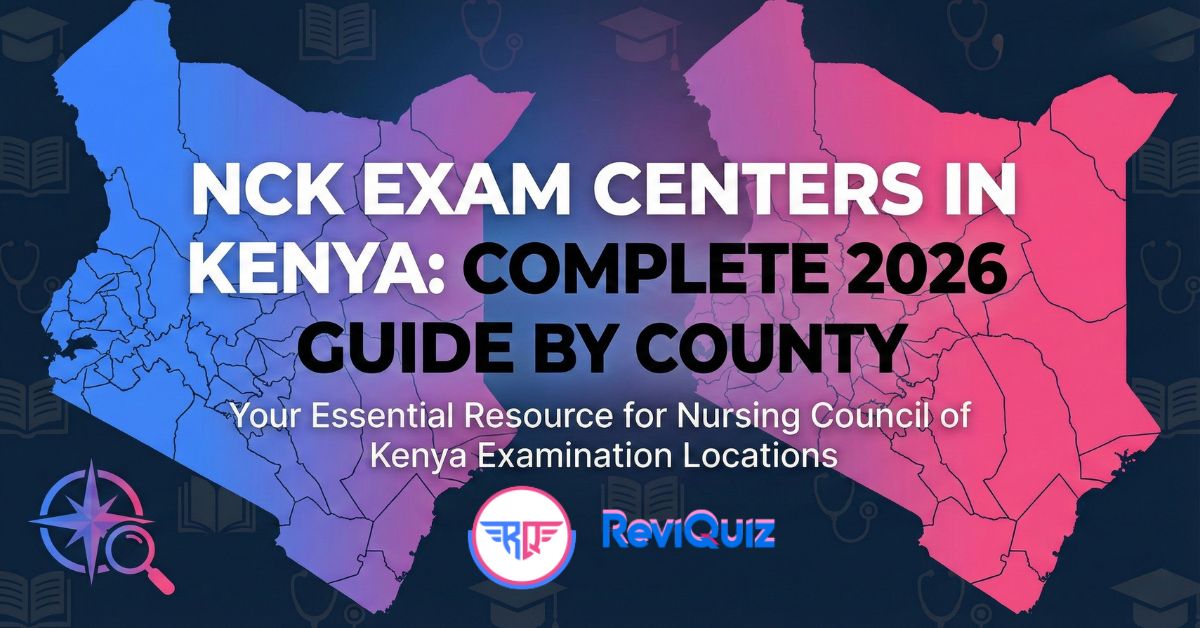
NCK Exam Centers in Kenya: Complete 2026 Guide by County
Introduction: Why Choosing the Right NCK Exam Center Matters Are you preparing to sit for your Nursing Council of Kenya (NCK) licensing examination in 2026? One of the most critical decisions you’ll make during registration is selecting your examination center. This choice affects everything from your travel arrangements to your exam-day stress levels. At ReviQuiz, Kenya’s leading NCK exam preparation platform, we’ve supported thousands of nursing students through their licensure journey. Through our work, we’ve discovered an important finding. Students who strategically choose their exam centers are significantly more likely to pass on their first attempt. Thorough preparation also plays a critical role in their success. This comprehensive guide provides you with: Complete List of NCK Exam Centers in Kenya (by County) Below is a table of key NCK exam centers compiled from official and reliable sources. We’ve included addresses, contacts, and suggestions for maps/videos. For a full, updated list per series, visit NCK’s site or Facebook page. County Center Name Address Contact Map/Video Placeholder Bomet Tenwek Mission School of Nursing Silibwet Rd, Bomet County, P.O. Box 39-20400, Bomet +254-728-091-900, +254 20 204 55 42, collegeofhealthsciences@tenwekhosp.org [Placeholder for Google Map embed of Tenwek Hospital, Bomet. Add a short video tour of the facility if available on YouTube.] Embu Kenya School of Government Embu Campus P.O. Box 402-60100, Embu +254-068-2231824/2231866/2231364, 0792718171, director.embu@ksg.ac.ke [Placeholder for Map: Embed interactive map showing Embu Campus location.] Garissa NEP Technical Training Institute Garissa Town, P.O. Box 329-70100, Garissa (along Sankuri Road) 046-2102454, 0716061788, info@northeasternpoly.ac.ke [Placeholder for Map: Include a satellite view or directions video from Garissa town center.] Homa Bay Maseno University Homa Bay Town Learning Center SONYACO Plaza, Homa Bay Town (P.O. Box 3275-40100, Kisumu for admin) 057-351620, 0722-203411, info@maseno.ac.ke [Placeholder for Map: Embed Google Map of SONYACO Plaza, Homa Bay.] Kakamega Masinde Muliro University of Science and Technology P.O. Box 190-50100, Kakamega +254-716-903672, +254-057-2505222/3, info@mmust.ac.ke [Placeholder for Map: Add campus map image or navigation video.] Kiambu Mt. Kenya University Thika General Kago Rd, P.O. Box 342-01000, Thika +254-709-153000, +254-020-2878000, info@mku.ac.ke [Placeholder for Map: Embed location near Thika town center.] Kisii St. Paul’s Nyabururu Teachers Training College P.O. Box 2678-40200, Kisii 0711498435, st.pauls.ttcnyabururu@gmail.com [Placeholder for Map: Include aerial view or short video walkthrough.] Kisumu Kisumu National Polytechnic Technology Road, Next to Kisumu Stadium, P.O. Box 143-40100, Kisumu +254-723-446773, +254-742-809415, info@kisumupoly.ac.ke [Placeholder for Map: Embed near Kisumu Stadium.] Machakos Scott Christian University P.O. Box 49-90100, Along Machakos-Kangundo Rd, Machakos +254-713-745404, info@scott.ac.ke [Placeholder for Map: Directions from Machakos town.] Meru Meru National Polytechnic P.O. Box 111-60200, Meru (along Meru-Nanyuki Highway) +254-719-347059, info@mnp.ac.ke [Placeholder for Map: 5km from Meru town.] Mombasa Kenya Coast National Polytechnic (formerly Mombasa TTI) Kisauni Road, P.O. Box 81220-80100, Mombasa +254-710-389727, +254-712-725554, info@kenyacoastpoly.ac.ke [Placeholder for Map: Embed Kisauni Road location.] Nairobi Cicely McDonell School of Nursing (The Nairobi Hospital) Argwings Kodhek Rd, Nairobi +254-020-2845000, +254-730-666854, schoolofnursing@nbihosp.org [Placeholder for Map: Near Nairobi CBD.] Nairobi KMTC Nairobi Campus Off Ngong Road, P.O. Box 30195-00100, Nairobi +254-020-2725711/2/3/4, info@kmtc.ac.ke [Placeholder for Map: Embed off Ngong Road.] Nairobi Moi Girls School, Nairobi (Kileleshwa) Kileleshwa Area, off Ngong Road Nakuru Egerton University – Nakuru Town Campus Nakuru Town Campus, Kenyatta Avenue Nyeri Outspan Medical College Rware Off Baden Powel Road, P.O. Box 1955-10100, Nyeri +254-711-277009, +254-702-303777, admissions@omc.ac.ke [Placeholder for Map: Near Nyeri town.] Uasin Gishu Eldoret National Polytechnic Eldoret-Kapsabet Road, P.O. Box 4461-30100, Eldoret +254-0797-222666, +254-0738-092126, inquiries@tenp.ac.ke [Placeholder for Map: 5km from Eldoret town.] Samburu Consolata Wamba School of Nursing Wamba Mission, Samburu County Trans- Nzoia Kitale Technical Training Institute Kitale Town, along Kitale-Endebess Road Note: This list is based on 2024-2025 data; NCK may update for 2026. Centers like universities and polytechnics often host exams due to their facilities. For personalized assignment, log into NCK Online Services. BOMET COUNTY Tenwek Mission School of Nursing Full Address: Tenwek Mission Hospital, BometGPS Coordinates: -0.7333, 35.1833Exam Center Code: NCK-BOM-001Capacity: Medium (200+ candidates)Region Served: South Rift Valley Facilities: Getting There: Accommodation Options: Why Choose This Center: Contact Information: Pro Tips: EMBU COUNTY Government Training Institute, Embu Full Address: Embu Town, along Embu-Meru HighwayGPS Coordinates: -0.5311, 37.4578Exam Center Code: NCK-EMB-001Capacity: Medium (200+ candidates)Region Served: Eastern (Embu, Kirinyaga, Tharaka-Nithi) Facilities: Getting There: Accommodation Options: Why Choose This Center: Contact Information: Pro Tips: GARISSA COUNTY NEP Technical Training Institute, Garissa Full Address: Garissa Town, off Garissa-Nairobi HighwayGPS Coordinates: -0.4536, 39.6401Exam Center Code: NCK-GAR-001Capacity: Small-Medium (150+ candidates)Region Served: North Eastern (Garissa, Wajir, Mandera) Facilities: Getting There: Accommodation Options: Why Choose This Center: Contact Information: Pro Tips: HOMABAY COUNTY Maseno University – Homabay Town Learning Center Full Address: Homabay Town, near County HeadquartersGPS Coordinates: -0.5273, 34.4572Exam Center Code: NCK-HOM-001Capacity: Medium (150+ candidates)Region Served: Nyanza (Homabay, Migori) Facilities: Getting There: Accommodation Options: Why Choose This Center: Contact Information: Pro Tips: KAKAMEGA COUNTY Masinde Muliro University of Science and Technology (MMUST) Full Address: Kakamega-Webuye Road, MMUST Main CampusGPS Coordinates: 0.2827, 34.7519Exam Center Code: NCK-KAK-001Capacity: Large (400+ candidates)Region Served: Western Kenya (Kakamega, Vihiga, Bungoma, Busia) Facilities: Getting There: Accommodation Options: Why Choose This Center: Contact Information: Pro Tips: KIAMBU COUNTY Mount Kenya University, Thika Full Address: Thika Town, off Thika-Garissa Road, MKU Main CampusGPS Coordinates: -1.0403, 37.0892Exam Center Code: NCK-KIA-001Capacity: Large (400+ candidates)Region Served: Central Kenya (Kiambu, Murang’a, parts of Nairobi) Facilities: Getting There: Accommodation Options: Why Choose This Center: Contact Information: Pro Tips: KISII COUNTY St. Paul’s Nyabururu Teachers Training College Full Address: Nyabururu, Kisii CountyGPS Coordinates: -0.6774, 34.7669Exam Center Code: NCK-KIS-001Capacity: Medium (200+ candidates)Region Served: Nyanza (Kisii, Nyamira) Facilities: Getting There: Accommodation Options: Why Choose This Center: Contact Information: Pro Tips: KISUMU COUNTY Kisumu Polytechnic Full Address: Obote Road, Kisumu TownGPS Coordinates: -0.0917, 34.7680Exam Center Code: NCK-KSM-001Capacity: Large (300+ candidates)Region Served: Nyanza (Kisumu, Siaya, parts of Vihiga) Facilities: Getting There: Accommodation Options: Why Choose This Center: Contact Information: Pro Tips: MACHAKOS COUNTY Scott’s Theological College, Machakos Full Address: Machakos Town, near Machakos UniversityGPS Coordinates: -1.5177, 37.2634Exam Center Code: NCK-MAC-001Capacity: Medium (200+ candidates)Region Served: Lower Eastern (Machakos, Makueni, Kitui) Facilities: Getting There: Accommodation Options: Why Choose This Center: Contact Information: Pro Tips: MERU COUNTY Meru Technical Training Institute Full
NCK Exam Revision Questions & Answers 2026 (Free MCQs)
Preparing for the NCK exam is no small feat. Whether you are a BScN degree candidate, the pressure to pass this licensure exam is real. It is also significant if you are a KRCHN diploma student. It’s crucial to succeed on your first attempt. One highly effective strategy involves answering NCK exam revision questions consistently. You should do this across all tested subjects. Provide detailed rationales to understand the ‘why’ behind every answer. In this post, ReviQuiz provides you with 20 free NCK exam MCQs. These include full answers and rationales. They cover the six core subjects tested in the NCK exam. These questions are not from random internet sources. They are carefully written to reflect the style, difficulty, and subject coverage of the actual NCK exam. At the end of this post, you will find links to our full NCK revision question banks. These banks include 1,000+ more MCQs and rationales. What Subjects Are Covered in NCK Exam Revision Questions? The NCK exam tests you across six major subject areas. Your revision questions should cover all of them proportionally. Here is what to expect: The free MCQs below are spread across these subjects. This ensures you get a balanced warm-up. You can then dive into our full question banks. 20 Free NCK Exam Revision Questions with Answers & Rationales Instructions: Read each question carefully and choose the best answer before checking the rationale below. Question 1 | Medical-Surgical Nursing A patient with Type 2 Diabetes Mellitus presents with fasting blood glucose of 14 mmol/L. Which of the following is the PRIORITY nursing intervention?A. Administer oral hypoglycaemic as prescribedB. Encourage oral fluid intakeC. Notify the physician immediatelyD. Recheck blood glucose in 30 minutes Correct Answer: C. Notify the physician immediatelyRationale: A fasting blood glucose of 14 mmol/L is significantly above the normal range (3.9–5.6 mmol/L) and indicates uncontrolled hyperglycaemia. The priority action follows the nursing process — assessment has been done, and the next step is to communicate a critical finding to the physician before initiating treatment. Independent nursing actions like encouraging fluids are supportive but not the priority here. Question 2 | Medical-Surgical Nursing A nurse is caring for a post-operative patient 8 hours after abdominal surgery. The patient reports increasing pain at the surgical site, has a temperature of 38.8°C, and the wound appears red and warm. What should the nurse suspect?A. Normal post-operative inflammationB. Wound dehiscenceC. Surgical site infection (SSI)D. Deep vein thrombosis (DVT) Correct Answer: C. Surgical site infection (SSI)Rationale: The triad of increasing pain, fever (>38°C), and localised redness and warmth at the surgical site are classic signs of surgical site infection (SSI). Normal post-operative inflammation typically resolves within 24–48 hours and does not present with fever this high. Wound dehiscence involves wound separation, not infection signs. DVT presents with calf pain and swelling, not wound symptoms. Question 3 | Pharmacology / Med-Surg A nurse is administering Furosemide (Lasix) 40mg IV to a patient with heart failure. Which of the following electrolyte imbalances should the nurse monitor for MOST closely?A. HypernatraemiaB. HypokalaemiaC. HypercalcaemiaD. Hypermagnesaemia Correct Answer: B. HypokalaemiaRationale: Furosemide is a loop diuretic that works on the loop of Henle to inhibit reabsorption of sodium, chloride, and potassium. The most common and clinically significant electrolyte imbalance associated with loop diuretics is hypokalaemia (low potassium). Hypokalaemia can cause dangerous cardiac arrhythmias, muscle weakness, and fatigue. The nurse should monitor potassium levels closely and report values below 3.5 mmol/L. Question 4 | Community Health Nursing During a community health assessment, a nurse identifies that a majority of under-5 children in a village have stunted growth. What is the MOST likely underlying cause the nurse should investigate?A. Malaria prevalenceB. Chronic malnutritionC. Inadequate immunisation coverageD. Poor sanitation and water quality Correct Answer: B. Chronic malnutritionRationale: Stunting (low height-for-age) is the classic indicator of chronic malnutrition — specifically long-term inadequate intake of calories, proteins, and micronutrients during the first 1,000 days of life. While malaria, poor sanitation, and low immunisation coverage all contribute to child health problems, they primarily cause acute illness (wasting, diarrhoeal diseases, vaccine-preventable diseases) rather than stunting. The nurse should assess dietary practices, food security, and maternal nutrition. Question 5 | Community Health Nursing A public health nurse is planning a health education session on malaria prevention for a rural community in Kenya. Which of the following is the MOST cost-effective and evidence-based intervention to recommend?A. Indoor residual spraying (IRS) monthlyB. Distribution of Long-Lasting Insecticidal Nets (LLINs)C. Mass drug administration with Artemether-LumefantrineD. Draining all stagnant water in the community Correct Answer: B. Distribution of Long-Lasting Insecticidal Nets (LLINs)Rationale: Long-Lasting Insecticidal Nets (LLINs) are the most cost-effective, evidence-based primary prevention strategy for malaria at the community level, strongly supported by WHO and Kenya’s National Malaria Control Programme. They provide direct protection during sleeping hours when mosquito bites are most common. IRS is effective but expensive and requires trained personnel for monthly application. Mass drug administration is a treatment, not a prevention strategy. Draining stagnant water is beneficial but not feasible as a standalone community-wide solution. Question 6 | Midwifery Nursing A primigravida at 38 weeks gestation presents to the antenatal clinic with blood pressure of 158/104 mmHg, proteinuria 2+ on dipstick, and reports severe headache. What is the CORRECT diagnosis?A. Gestational hypertensionB. Mild pre-eclampsiaC. Severe pre-eclampsiaD. Chronic hypertension with superimposed pre-eclampsia Correct Answer: C. Severe pre-eclampsiaRationale: Severe pre-eclampsia is diagnosed when BP is ≥160/110 mmHg OR there is significant proteinuria (2+ or more) WITH severe symptoms such as severe headache, visual disturbances, epigastric pain, or thrombocytopaenia. This patient has BP of 158/104 (borderline severe), proteinuria 2+, and severe headache — the combination of these features, especially the severe headache indicating possible cerebral involvement, classifies this as severe pre-eclampsia requiring urgent intervention. Gestational hypertension has no proteinuria. Mild pre-eclampsia has BP <160/110 and no severe features. Question 7 | Midwifery Nursing A woman in active labour has a partograph that shows the cervical dilation line has crossed the action line. What is the MOST appropriate immediate nursing action?A.
Acute Confusion Nursing Care Plan for Nursing Students
ReviQuiz Nursing Student Resource | Complete Guide to Confusion Nursing Care Plans This comprehensive nursing care plan guide is designed for nursing students preparing for clinical practice, NCK exams, and other professional nursing assessments. Whether you’re a BSc Nursing student or KRCHN diploma candidate, this ReviQuiz resource will help you master acute confusion management. This table is designed as a study resource for NCK Nursing Students to understand the clinical management of patients with cognitive impairment. Nursing Assessment Nursing Diagnosis Goals & Outcomes Nursing Interventions Scientific Rationale Objective: Fluctuating LOC, agitation, tremors, hallucinations.Subjective: Disorientation to time/place, fear, misperceptions. Acute Confusion related to altered cerebral metabolism (e.g., infection, dehydration, or medication side effects). Client will regain normal reality orientation and level of consciousness within 24–48 hours of treatment. Orient the client to surroundings, staff, and time frequently using clocks and calendars. Reorientation reduces anxiety and provides a sense of security in unfamiliar environments. Vitals & Labs: Monitor for fever (infection), hypoglycemia, or electrolyte imbalances. Risk for Injury related to impaired judgment and psychomotor agitation. Client will remain free from falls or injury during episodes of confusion. Modulate sensory exposure: Provide a calm, quiet environment; eliminate extraneous noise. Overstimulation can be misinterpreted by a confused brain, leading to increased agitation. History: Assess for substance abuse, polypharmacy, or underlying dementia. Disturbed Sleep Pattern related to disrupted sleep-wake cycles and hospital environment. Client will participate in ADLs and maintain a stable sleep-wake cycle. Avoid physical restraints. Use constant observation or “sitters” if the patient is a high fall risk. Restraints often worsen agitation and can lead to physical complications or trauma. Pain Scale: Observe for grimacing or hitting if the client is non-verbal. Impaired Communication related to dysphasia or disorganized thinking. Client will verbalize understanding of causative factors (once stabilized). Treat underlying causes immediately (e.g., administer IV fluids for dehydration or antibiotics for UTI). Delirium is often a symptom of a reversible medical condition; treating the cause resolves the confusion. Medication Review: Check for anticholinergics, sedatives, or opioids. Self-Care Deficit related to cognitive impairment and inability to follow tasks. Client will demonstrate appropriate motor behavior and follow simple directions. Identify yourself by name at every contact and use the client’s preferred name. Consistent, respectful interaction builds trust and helps the client process social cues. Key Takeaways for Nursing Students What is Acute Confusion? (ReviQuiz Definition for Nursing Students) Confusion is a clinical term nursing students and healthcare professionals use to describe a pattern of cognitive impairments. It indicates a disruption in cerebral metabolism and brain function. Acute confusion, also known as delirium or an acute confusional state, can affect patients of any age and typically develops over hours to days. For nursing students learning assessment skills, it’s essential to understand that cognitive impairments in older adults can manifest in various forms. Impairment in instrumental activities of daily living (ADLs) has been shown to correlate with dementia and may be one of the early warning signs of cognitive changes. Altered mental status or disorientation can be caused by multiple factors including infection, fluid or electrolyte imbalances, or cerebrovascular accident (CVA). Nursing students must learn to identify these underlying causes to provide appropriate patient-centered care. Risk Factors Nursing Students Should Recognize Factors that increase the risk for delirium and confusional states can be categorized into: The change is commonly caused by a medical condition, substance intoxication, or medication side effects—all critical learning points for nursing students on clinical placements. Causes of Acute Confusion (Essential Knowledge for Nursing Students) The pathophysiology of acute confusion or delirium is not fully understood. Multiple theories describe potential pathophysiologic causes, and any single case of delirium likely involves one or more of these theories in a complex, interconnected process. Nursing students should be aware of the following factors: Signs and Symptoms: Clinical Assessment for Nursing Students A careful and complete physical examination, including a mental status examination, is necessary for nursing students to master. Testing vital signs—temperature, pulse, blood pressure, and respiration—is mandatory. Healthcare providers depend on nursing notes and health records for identifying a fluctuating course; therefore, accurate documentation of observed signs and symptoms is essential. Key Clinical Manifestations: Nursing Goals and Expected Outcomes (ReviQuiz Study Guide) The nursing goals and outcomes for acute confusion aim to identify and treat the underlying cause, promote patient safety, optimize patient cognition and functional status, and educate patients and families about management strategies. These are essential learning objectives for nursing students: Nursing Diagnosis Examples for Acute Confusion After a thorough assessment, a nursing diagnosis is formulated to address acute confusion based on the nurse’s clinical judgment and the patient’s unique condition. While nursing diagnoses provide a framework for organizing care, their practical usefulness may vary. Here are example nursing diagnosis statements nursing students can use: Detailed Nursing Assessment and Rationales (ReviQuiz Study Resource) The nursing assessment for acute confusion involves gathering comprehensive information on the patient’s cognitive function, medical history, medication use, and potential contributing factors. This section provides essential assessment guidelines for nursing students: 1. Identify Contributing Factors Assess for substance abuse, seizure history, recent ECT therapy, episodes of fever/pain, presence of acute infection (especially urinary tract infection in older adults), exposure to toxic substances, traumatic events, and environmental changes including unfamiliar noises and excessive visitors. Rationale: These baseline pieces of information assist in developing a specific care plan. Almost any medical illness, intoxication, or medication can cause delirium or acute confusion. Often, it is multifactorial in etiology; therefore, each contributing cause must be assessed. 2. Conduct Accurate Mental Status Examination Use validated assessment tools such as the Confusion Assessment Method for the ICU (CAM-ICU), Intensive Care Delirium Screening Checklist (ICDSC), Nursing Delirium Screening Scale (Nu-DESC), or 3D-CAM for general medical units. Rationale: The CAM-ICU is the most reliable score for detecting delirium in the ICU. Validated tools ensure accurate and consistent assessment across different nursing staff and settings. 3. Monitor Behavior and Cognition Continuously Assess the client’s behavior and cognition systematically and continually throughout the day and night. Document fluctuations
Top Nursing Books to Ace Your 2026 NCK Exams
Introduction: Why Your Textbooks Matter for NCK Passing the Nursing Council of Kenya (NCK) licensing exam is the final hurdle between you and your career as a Registered Nurse. In 2026, the exam remains rigorous, demanding not just memorization, but deep clinical reasoning. Many students rely solely on old photocopied notes. However, those who top the exams know a secret: You need the right resources. Below is the definitive list of the top 6 textbooks every Kenyan nursing student needs. It also includes how to pair them with ReviQuiz courses for guaranteed success. Why These Textbooks Are Perfect for NCK Exam Success in 2026 The NCK exam syllabus for 2026 focuses on practical application, with questions drawn from real-world scenarios in Kenyan healthcare settings. Official NCK guidelines emphasize mastery in areas like patient safety, ethical practice, and interdisciplinary care—topics deeply covered in these books. Based on insights from top performers and exam trends, these PDFs provide: Compared to competitors like Medical Scholars app or Scribd uploads, which often lack structured Kenyan focus, our selections are handpicked for NCK relevance. Ready to get started? Explore our NCK Basic Revision Course for integrated practice questions. 1.The “Bible” of Nursing: Brunner & Suddarth’s Textbook of Medical-Surgical Nursing (15th Edition) Medical-Surgical Nursing is the bulk of the NCK exam. The 15th edition provides the latest evidence-based practices for conditions common in our clinical settings. 2. Mastering the Community: Community Health (3rd Edition) – Chris Wood In Kenya, Community Health is a pillar of our healthcare system. Chris Wood’s text is specifically tailored to the challenges and structures of health in the African context. Focused on public health principles, this edition by Chris Wood emphasizes community assessment, epidemiology, and health promotion—key to the NCK community health module. It includes Kenyan-relevant examples on disease prevention and primary care. 3. Pharmacology Made Easy: Lehne’s Pharmacology for Nursing Care (10th Edition) Pharmacology can be overwhelming, but Lehne’s breaks it down with drug prototypes, adverse effects, and nursing implications. The 10th edition covers essential medications used in Kenyan hospitals, including antimalarials and antiretrovirals. Drug calculations and mechanisms of action are where many students lose marks. Lehne’s simplifies pharmacology, focusing on what you actually need to know for patient care. 4.The Gold Standard for Midwifery: Myles Textbook for Midwives African Edition 3rd Edition PDF Midwifery requires a specific focus on local maternal health trends. The African Edition of Myles is indispensable for understanding the NCK Midwifery paper requirements. Tailored for African contexts, this edition covers antenatal care, labor management, and postnatal complications with a focus on high-risk pregnancies common in Kenya. 5.Foundations of Anatomy: Ross & Wilson Anatomy and Physiology in Health and Illness 14th Edition PDF – Anne Waugh You cannot understand disease without understanding the body. Ross & Wilson remains the most student-friendly anatomy book for Kenyan nurses. Why It’s a Must-Have for NCK 2026: Foundational for all NCK modules, with visuals that aid in understanding complex systems—better than fragmented online notes. ReviQuiz Tip: Dive deeper with our Paediatric Nursing NCK Revision Notes & Practice Questions. 6. Saunders Comprehensive Review for the NCLEX-RN® Examination – Linda Anne Silvestri PhD RN ANEF FAAN Wait, isn’t this for the American exam? Yes, but the NCK has shifted towards Critical Thinking Questions. Saunders is the best book in the world for learning how to answer nursing questions. While NCLEX-focused, this review adapts well to NCK with thousands of practice questions, rationales, and test-taking strategies. Why It’s a Must-Have for NCK 2026: Overlaps with NCK’s comprehensive format, offering extra practice for critical thinking—superior to basic Kenyan forums. Beyond Textbooks: Why You Still Need Structured Practice Here’s an uncomfortable truth: Most NCK candidates who fail do so despite reading all the right textbooks. Why? Because reading textbooks builds knowledge, but passing the NCK requires: This is where ReviQuiz transforms textbook knowledge into exam success. The ReviQuiz Advantage ReviQuiz offers what textbooks cannot: NCK-Specific Question Banks Intelligent Performance Analytics Detailed Rationales for Every Question Study Anytime, Anywhere Expert Kenyan Educator Support Specialized Study Packages Matching Your Textbooks To maximize the value of your textbook investment, pair each resource with targeted ReviQuiz practice: For Medical-Surgical Nursing (Brunner & Suddarth’s) Comprehensive practice questions covering all body systems, with detailed rationales that reference evidence-based nursing interventions. Perfect complement to Brunner & Suddarth’s content. For Community Health (Chris Wood) Scenario-based questions testing community health assessment, health promotion, and primary healthcare delivery – exactly what you need after reading Wood’s textbook. For Midwifery (Myles African Edition) High-yield midwifery questions covering antenatal, intrapartum, and postpartum care, plus newborn management – reinforcing Myles content with NCK-style application. Complete NCK Preparation Packages Not sure where to start? ReviQuiz offers comprehensive packages: For Beginners: ReviQuiz NCK Basic Revision Course → Perfect if you’re just starting NCK prep and want foundational practice alongside your textbook reading. For Serious Candidates: ReviQuiz NCK Premium Revision Course → Comprehensive question banks, mock exams, and detailed performance analytics. For Excellence: ReviQuiz NCK Pro Revision Course – Ultimate Package → Everything you need: 4,000+ questions, all specialized modules, expert support, and guaranteed licensure success resources. Your NCK Textbook Investment: Cost vs. Value Total cost of all 6 recommended textbooks (physical copies): KSh 45,000 – 60,000 Total cost of all 6 PDF versions from ReviQuiz Shop: Significantly less, plus immediate access But here’s what matters more than cost: These textbooks represent more than study materials – they’re professional references you’ll use throughout your nursing career. The anatomy knowledge from Ross & Wilson, the pharmacology insights from Lehne’s, and the clinical expertise from Brunner & Suddarth’s will serve you for years beyond the NCK exam. Smart Investment Strategy: Real Success Stories: Textbooks + Practice = NCK Pass Sarah M., KRCHN Graduate (2025): “I used Brunner & Suddarth’s and Myles African Edition for content, but what really made the difference was practicing with ReviQuiz questions. The textbooks taught me WHAT to know; ReviQuiz taught me HOW to apply it in the exam. Passed with Credit on my first attempt!” James K.,
NCK Resit Exam February 2026: Ultimate Retake Guide for Failed August 2025 Candidates – Proven Tips, Strategies, and Revision Resources to Pass on Your Second Try
Introduction: It’s Not the End of the Road Failing the Nursing Council of Kenya (NCK) exam can feel devastating, especially after years of hard work in nursing school. You’re not alone if you didn’t pass the August 2025 licensure exam. There’s good news. The NCK has scheduled a special resit opportunity from February 17 to 20, 2026, specifically for unsuccessful candidates like you. This computer-based exam at designated centers gives you a fresh chance to demonstrate your knowledge and skills. In this guide, we’ll cover everything you need to know to turn your setback into success. We will help you understand why you might have failed. We provide actionable study strategies. Get revision tips using vetted question banks. These are not official past papers, but are expertly compiled from various sources. This includes recent university exams. Plus, we offer mental health support. We’ve got you covered. Our goal? To help you rank higher in your preparation and convert this resit into a passing score. Remember, many successful nurses have been in your shoes and come out stronger. As Kenya’s leading NCK revision platform, ReviQuiz has helped thousands of students pass their exams. We provide a blend of questions from NCK-inspired sources. Our content includes university papers and examiner-vetted materials. Let’s dive in and get you ready for February 2026! Congratulations to all the Nursing Council of Kenya (NCK ) Recovering from the “August 2025 Burn” Before you touch a textbook, you must heal. Failing an exam can lead to “Academic Trauma,” making it hard to concentrate on new material. Understanding the NCK Resit Process for February 2026 First things first: Know the logistics to avoid any surprises. Based on official NCK announcements, here’s the key info for the February 2026 resit: Read this for the latest 2026 Exam Dates and Schedules : Pro Tip: Download the official NCK exam instructions from nckenya.com for full details. If you’ve already applied, use this time to focus on revision. Critical Reminder: Attendance at the rehearsal and the two mock exams is MANDATORY. If you skip these, you may be disqualified from the main exam. Make sure you are familiar with your designated center early. Why You Might Have Failed the August 2025 Exam – And How to Fix It Failure isn’t the end; it’s feedback. Common reasons Kenyan nursing students fail NCK exams include: Fixes: At ReviQuiz, our courses pinpoint these issues with diagnostic quizzes. Ready to start? Check out our NCK Basic Revision Course for targeted fixes. Why “Just Past Papers” Aren’t Enough for the CBT Era Since 2020, NCK has moved away from paper exams to a digital, computer-based environment. Many students fail because they study using “leaked” or unverified PDFs that are often: The ReviQuiz Difference: We don’t just give you papers. We have worked with examiners to compile a blend of NCK questions and University-level standards. Every question in our NCK Basic Revision Course is vetted and comes with a Rationale—explaining why an answer is correct. Proven Strategies to Ace Your NCK Resit in February 2026 Time is short – the exam is just weeks away! Here’s a step-by-step plan tailored for retake candidates: 1. Create a Personalized Study Schedule 2. Master the Content with Smart Revision 3. Practice, Practice, Practice 4. Leverage Free and Paid Resources Mental Health Support: Staying Resilient During Resit Prep Failing an exam can trigger stress, anxiety, or self-doubt. Prioritize your well-being: Incorporate mental health into your routine: After every study session, journal one win. Professional Support: If the stress feels overwhelming, reach out to the Kenyan Nurses and Midwives Association for support resources. Exam Day Tips for February 2026 Conclusion: Your Path to NCK Success Starts Now You have the resilience. You have the experience. All you need now is the right tool. The February 2026 exam is your chance to turn your August setback into a professional milestone. Don’t just study hard—study smart. Join thousands of successful Kenyan nurses who upgraded from raw past papers to the ReviQuiz ecosystem. Ready to pass? Choose your path: Have questions about the re-sit process? Check our NCK Ultimate FAQs Guide or Contact Us today. You’ve got this! With the right strategies, resources, and mindset, the February 2026 resit can be your breakthrough. Don’t just aim to pass – aim to excel. At ReviQuiz, we’re committed to being Kenya’s #1 for NCK revision. We offer the best blend of questions without claiming official past papers. Ready to convert your prep into a passing score? Sign up for our free trial or explore all courses. Follow us on Instagram, Facebook, X, or LinkedIn for daily tips. Questions? Contact us.
NCK Exam 2026 Schedule: Dates, Deadlines & Fees Guide
Introduction: Your Complete NCK 2026 Exam Planning Guide Are you preparing to sit for the Nursing Council of Kenya (NCK) licensing examination in 2026? Whether you’re a diploma nursing student, degree candidate, or pursuing a specialized nursing qualification, understanding the exam schedule and meeting critical deadlines is the first step toward your nursing licensure success. At ReviQuiz, we know that proper planning combined with effective revision is what separates those who pass from those who struggle. This comprehensive guide offers the complete NCK 2026 examination schedule. It includes application deadlines, fees, and the registration process. Additionally, it provides proven strategies to maximize your preparation time. 🔴 UPDATE – 21st May 2026: The NCK Online Services Portal is now open for August 2026 Licensure Examination applications. Registration runs from 20th May to 3rd July 2026. Apply at osp.nckenya.go.ke. Dates for mocks, withdrawal deadline, and exam dates will be communicated by NCK in due course. Don’t just register — start revising now. Browse our NCK Revision Courses and give yourself the best chance of passing first time. Quick overview of NCK Exam 2026 Note: Dates are subject to official NCK announcements. Always verify with the Nursing Council of Kenya February 2026 NCK Exam Timetable & Key Dates NCK has released a detailed February 2026 schedule covering BScN, KRCHN, KRN/M, KEM, KEN and specialised programmes. Key February 2026 dates Main exams: 18–20 February 2026, depending on your programme. PAPERS PROGRAMME EXAM PERIOD: FEBRUARY 2026 9 am to 11 am 2 pm to 4pm One Paper Kenya Registered Paediatric Nurse [KRPAEDN] 18th February 2026 Paper 1 One Paper Kenya Registered Midwife [KRM] 18th February 2026 Paper 1 One Paper Kenya Registered Paediatric Critical Care Nurse [KRPAEDCCN] 18th February 2026 Paper 1 One Paper Kenya Registered Palliative Care Nurse [KRPCN] 18th February 2026 Paper 1 One Paper Kenya Registered Oncology Nursing [KRON] 18th February 2026 Paper 1 One Paper Kenya Registered Nurse Anesthetist [KRNA] 18th February 2026 Paper 1 One Paper Kenya Registered Opthalmic Nurse [KROPN] 18th February 2026 Paper 1 One Paper Kenya Registered Mental Health & Psychiatric Nurse [KRMH&PN] 18th February 2026 Paper 1 Two Papers Kenya Registered Nurse [KRN] 18th February 2026 Paper 1 One Paper Kenya Registered Peri-Operative Nurse [KRPON] 18th February 2026 Paper 1 One Paper Kenya Enrolled Community Health Nurse – Basic [KECHN B] 18th February 2026 Paper 1 One Paper Kenya Registered Critical Care Nurse [KRCCN] 18th February 2026 Paper 1 One Paper Kenya Registered Nephrology Nurse [KRNN] 18th February 2026 Paper 1 One Paper Kenya Registered Trauma and Emergency Nurse [KRT&EN] 18th February 2026 Paper 1 One Paper Kenya Registered Neonatal Nurse [KRNeoN] 18th February 2026 Paper 1 Two Papers Kenya Registered Community Health Nurse – Basic [KRCHN B] 19th February 2026 Paper 1 Paper 2 Two Papers Kenya Registered Nurse Midwife [KRN/M] 20th February 2026 Paper 1 Paper 2 Two Papers Kenya Registered Nurse/Mental Health Nurse [KRN/MH] 20th February 2026 Paper 1 Paper 2 Two Papers Bachelor of Science in Nursing [BScN] 20th February 2026 Paper 1 Paper 2 Two Papers Bachelor of Science in Midwifery [BScM] 20th February 2026 Paper 1 Paper 2 One Paper Kenya Enrolled Midwife [KEM] 20th February 2026 Paper 1 One Paper Kenya Enrolled Nurse [KEN] 20th February 2026 Paper 1 Table 1: Main exams: 18–20 February 2026, depending on your programme. May 2026 NCK Exam Timetable & Key Dates NCK has released a detailed May 2026 schedule covering BScN, KRCHN, KRN/M, KEM, KEN and specialised programmes. Key May 2026 dates Main exams: 13th –15th May 2026, depending on your programme. PAPERS PROGRAMME EXAM PERIOD: MAY 2026 9 am to 11 am 2 pm to 4 pm One Paper Kenya Registered Paediatric Nurse [KRPAEDN] 13th May 2026 Paper 1 One Paper Kenya Registered Midwife [KRM] 13th May 2026 Paper 1 One Paper Kenya Registered Paediatric Critical Care Nurse [KRPAEDCCN] 13th May 2026 Paper 1 One Paper Kenya Registered Paediatric Oncology Care Nurse (KRPAEDON) 13th May 2026 Paper 1 One Paper Kenya Registered Palliative Care Nurse [KRPCN] 13th May 2026 Paper 1 One Paper Kenya Registered Oncology Nursing [KRON] 13th May 2026 Paper 1 One Paper Kenya Registered Nurse Anesthetist [KRNA] 13th May 2026 Paper 1 One Paper Kenya Registered Ophthalmic Nurse [KROPN] 13th May 2026 Paper 1 One Paper Kenya Registered Mental Health & Psychiatric Nurse [KRMH&PN] 13th May 2026 Paper 1 Two Papers Kenya Registered Nurse [KRN] 13th May 2026 Paper 1 One Paper Kenya Registered Peri-Operative Nurse [KRPON] 13th May 2026 Paper 1 One Paper Kenya Enrolled Community Health Nurse – Basic [KECHN B] 13th May 2026 Paper 1 One Paper Kenya Registered Critical Care Nurse [KRCCN] 13th May 2026 Paper 1 One Paper Kenya Registered Nephrology Nurse [KRNN] 13th May 2026 Paper 1 One Paper Kenya Registered Trauma and Emergency Nurse [KRT&EN] 13th May 2026 Paper 1 One Paper Kenya Registered Neonatal Nurse [KRNeoN] 13th May 2026 Paper 1 Two Papers Kenya Registered Community Health Nurse – Basic [KRCHN B] 14th May 2026 Paper 1 Paper 2 Two Papers Kenya Registered Nurse Midwife [KRN/M] 15th May 2026 Paper 1 Paper 2 Two Papers Kenya Registered Nurse/Mental Health Nurse [KRN/MH] 15th May 2026 Paper 1 Paper 2 Two Papers Bachelor of Science in Nursing [BScN] 15th May 2026 Paper 1 Paper 2 Two Papers Bachelor of Science in Midwifery [BScM] 15th May 2026 Paper 1 Paper 2 One Paper Kenya Enrolled Midwife [KEM] 15th May 2026 Paper 1 One Paper Kenya Enrolled Nurse [KEN] 15th May 2026 Paper 1 Table 2: Main exams: 13th–15th May 2026, depending on your programme. Attached Below is the official NCK PDF showing latest 2026 Exam Dates and Calendar. Please Download NCK Exam 2026 Application Fees & Payment Details Complete Fee Breakdown The NCK examination fees for 2026 are expected to remain consistent with 2025 rates: Fee Component Amount (KSh) Registration Fee 7,000 Processing Fee 1,500 Total Exam Fee 8,500 Late Registration Penalty 1,000 (additional) Important Payment Notes: 💡 ReviQuiz Tip: Register early! You avoid late fees. You also secure your preferred examination